Click on the image to visit Temple Aliyah's website.

Sunday, March 17, 2013

An Interesting Morning


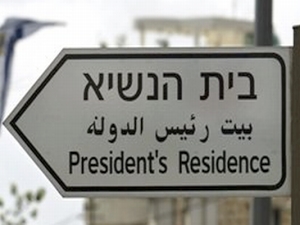
I finally got to visit Beit HaNasi (the official residence of the President of Israel) and meet Israel's President, Shimon Peres.  I say “finally,” because the apartment I'm living in during my stay here in Israel is just down the street from Beit HaNasi, and I pass it several times a week.


I had been wondering when I would get the opportunity to step inside.

Just yesterday, I learned that the eighth graders from the Solomon Schechter Day School of Greater Boston, who are finishing up their Israel trip, were going to be visiting Beit HaNasi this morning. 


I had been looking forward to meeting up with the group (six of whom are from Temple Aliyah), and to think that they were going to be right down the block!  

And so I walked over to Beit HaNasi and met the group as it was arriving. It was great to see them, particularly our shul's kids.  They looked well and seemed to be having a great time.  


In addition, I was permitted to enter Beit HaNasi with them, which was a real treat.  


The residence and grounds are very impressive.  We saw the Garden of Peace, where the former Pope once planted an olive tree, and where President Obama is expected to plant a tree that he will be bringing with him from the United States. We saw the synagogue, which is a cozy, handsome structure with a dramatic ark. 


(Those are the Hebrew words for, "And there was light," inscribed on the front.)

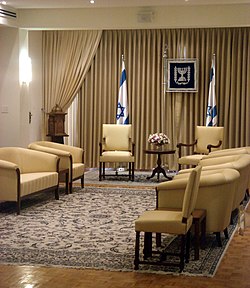
We saw the room where the President greets dignitaries, such as President Obama, who is expected here in just two days.  


And we saw President Peres.  He is as dignified and urbane in person as he appears in the press. He greeted us warmly and with gentle humor.  (Note the two security guards on either side of Mr. Peres' secretary.)


All in all, it was an interesting morning.  

On my way back, it started to hail.  Yes, hail!

This, coming so soon after the swarms of locusts flying over the border from Egypt, gave me pause. What next? Boils?

Wednesday, March 13, 2013

How Is This Presidential Visit Different From All Other Presidential Visits?


I would like to share a few reflections on President Obama’s scheduled visit to Israel next week.

Excitement in the air

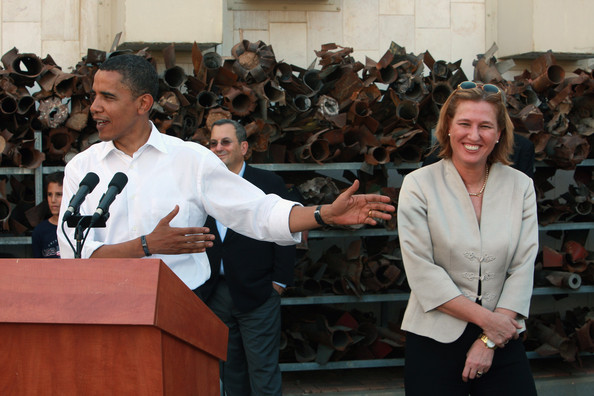
The last time Mr. Obama came to Israel was in 2008, when he was running for President.  Two pictures taken during that trip appear below. The first shows then-Senator Obama meeting with then-Foreign Minister Tsipi Livni—who is currently hoping to serve as Israel’s chief negotiator in talks with the Palestinians in the new government that Prime Minister Netanyahu is putting together:


(Incidentally, that picture was taken at the police station in Sderot.  In the background you can see the many spent rockets from Gaza that have been collected over the years.)  

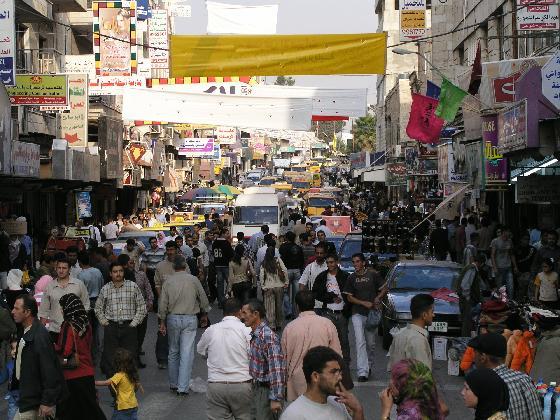
The second picture from Mr. Obama’s last visit to Israel was taken at what I hope is a familiar site.  


There has been a lot of attention in the media surrounding the President’s upcoming visit. That’s not to say that Mr. Obama is popular with everyone here.  He isn’t.  News anchors do not hesitate to remind their listeners that Messrs. Obama and Netanyahu have had a rocky relationship. (Incidentally, it hasn’t always been rocky.  Not too long ago, when the President personally intervened to help secure and evacuate the Israeli embassy in Cairo, Mr. Netanyahu praised Mr. Obama effusively.  But the news media tend to focus on conflict and controversy rather than comity.) 

Commentators have engaged in endless speculation regarding how the President’s trip will play out.   Every aspect of the trip—every site that the President will visit, and every site that he won’t; the foods he will eat and the foods that he won’t (about which I’ll have more to say below)—is being scrutinized. 

For example, as of now the President is not scheduled to address the Knesset (Israel’s parliament). 


This has been met with disappointment.  Several legislators have written to the President, urging him to reconsider because they feel that the Knesset is the ideal venue for him to address the Israeli people.  Other legislators have their own reasons.  For example, Moshe Feiglin, a member of Prime Minister Netanyahu’s Likud Party, expressed disappointment because he had been hoping to stage a public walkout of the Knesset during Obama’s speech.  (Perhaps this has something to do with the decision not to schedule a speech there.)

Inevitably, the question of President Obama pardoning Jonathan Pollard has come up.  So far, Pollard has served 28 years in prison for spying on the United States on behalf of Israel.  (For Wikipedia’s version of this unfortunate story, see:  http://en.wikipedia.org/wiki/Jonathan_Pollard .)  Every Israeli leader who will be meeting with Obama, including Prime Minister Netanyahu and President Peres, has been asked to request Jonathan Pollard’s pardon.  The Pollard family has asked that Israelis in general and Israeli leaders in particular treat Mr. Obama with great respect during his upcoming visit, and not seek to embarrass him.  Time will tell whether they will heed this request.  (Incidentally, even without a presidential pardon, it is anticipated that Pollard’s life sentence will be commuted by the time he completes thirty years of prison, in 2015.) 

Obama also hopes to visit the Palestinian city of Ramallah during his trip. 


The President is not that popular there either.  As one Palestinian interviewed on the news yesterday put it, “He’s not coming to eat humus and falafel here. He’s coming because it’s in the best interests of the United States to reach out.  But I wish he were offering some concrete proposals.”

Speaking of concrete proposals, the President will apparently not be offering any to try to re-start negotiations between the Israelis and the Palestinians.  Or so he and his representatives have made clear. This seems to have been met with relief among many, yet others are not so sanguine. Yes, the West Bank seems calm now. But in fact, the situation is fundamentally unstable.  Israel, a thriving democracy, exercises military, political and economic control over the lives of two million stateless Palestinians, inevitably breeding resentment and hostility.  There have been a number of incidents over the past few weeks that suggest that the situation could explode at any time.  (See here:  http://www.haaretz.com/news/diplomacy-defense/with-recent-escalation-in-west-bank-israelis-and-palestinians-edge-closer-to-boiling-point.premium-1.505304 .)  Perhaps the President is wise not to bring new ideas at this time.  But hopefully they will arise and be considered seriously by the parties, sooner rather than later.

An enthusiastic ambassador

The President could not have a more enthusiastic supporter and cheerleader here than the American ambassador to Israel, Daniel Shapiro. 


Mr. Shapiro, it seems, is everywhere, promoting the American-Israeli alliance. One day he’s visiting a football game in the Tel Aviv area, another day he’s meeting new American olim (immigrants).  I met him at Rabbi David Hartman’s funeral last month. He’s bright, professional, and personable.  And he’s no stranger to the Boston area.  He graduated from Brandeis and did graduate work at Harvard.  And gosh, can he speak Hebrew:  watch the following YouTube video of him answering questions on television in Hebrew about the President’s upcoming trip.  Even the news anchors are impressed: https://www.youtube.com/watch?feature=player_embedded&v=ViNny13j3ho .

Under Mr. Shapiro’s leadership, the U.S. embassy is using Facebook rather creatively to improve Israeli perceptions of America here.  For example, the embassy is holding a contest:  they’re giving away 20 tickets to attend the President’s major address here next week to the people who provide the most original and creative reasons why they should be invited: 


Other fun and irreverent contests show up on the page as well.  For example, recently the Ambassador posted the following question: 

President Obama is the real deal, but which of these Presidents did you like best?

A - Mackenzie Allen
B - Josiah "Jed" Bartlett
C - David Palmer


If you really want to get to know Ambassador Shapiro, take a look at the Purim costumes he and his wife recently wore (scroll down on his Facebook page, which you can access here: https://www.facebook.com/AmbassadorDanShapiro?fref=ts ).


Nu?

I began this post with a question:  How is this presidential visit different from all other visits? 

The answer, of course, has to do with Passover, so let me say a little about that. 

Obviously, Passover is coming.  (Today is Rosh Hodesh Nisan, so we have exactly two weeks to go.)  In the States, we know when Passover is coming because, in the supermarkets, there are special sections (usually at the ends of certain aisles) with large signs that say, “Kosher for Passover.”  And what do you find there?  Usually, traditional Eastern European Jewish foods like gefilte fish and borscht, as well as matzo. 

Here in Israel, it’s different.  Yes, there are “Kosher for Passover” signs.  But they’re all over the store!  And there are signs everywhere else as well, signs that read, “Hametz!” Also, the kinds of foods in the Kosher for Passover sections are different.  There is much more variety than you would find in the States.  Finally, you can find lots and lots of food that is kosher for Passover but which contains “kitniyot,” (legumes of one kind or another, traditionally not eaten by Ashkenazim on Pesach).  For example, today I saw Kosher for Passover rice, humus, and tofu!   Those aren’t too easy to find in the States.

Even if you didn’t step foot in a supermarket you would be reminded that Passover is coming, because Egypt is suffering from a plague of locusts, and those locusts are now finding their way into Israel!  I kid you not:  swarms of locusts are crossing the Israeli border and threatening farms in the Negev.  Take a look:


This has led to some interesting stories in the paper.  Many varieties of locusts, as some of you may be aware, are kosher.  They’re apparently quite tasty, and so a number of local chefs have recently shared recipes for locust dishes.  If you have a stomach for it, take a look at the Wall Street Journal video accessible at the following site: http://www.janglo.net/index.php?option=com_adsmanager&page=display&catid=99&tid=256672 )

Which leads me finally to the answer to the question I posed at the beginning of this posting.  How indeed is our President’s upcoming visit to Israel different from any other presidential visit? 

The answer is this:  Although President Obama is going to be visiting Israel before (and not during) Passover, all of the food that he will be served at the King David Hotel, where he and his staff will be staying, will be Kosher for Passover. 

And why is that?  The reason is simple: there is just no time between the end of the President’s visit and the beginning of Passover for the hotel kitchens to be kashered, so it is all going to have to happen in advance.  Which means that the President will not be served any of those delicious Israeli rolls or pitas or bourekas—even though it won’t yet be Passover! But, not to worry: the chefs at the King David Hotel have it well under control.  In case you need convincing, take a look at the following article:


Let me conclude by wishing everyone a happy and a kosher Passover.   I hope that the holiday will be a wonderful opportunity to be together with friends and family, and that everyone will enjoy a festive seder – but I hope that the seder will be more than a feast.  I hope it will present opportunities for each of us to talk about freedom and about the many different ways in which we can each contribute to greater freedom in our communities, in Israel, and throughout the world.

Hag Sameach!

Sincerely,

Rabbi Carl M. Perkins


Wednesday, March 6, 2013

What do Tchaikovsky and Hadassah have in common?

I've long been been a supporter of Hadassah.  There are several good reasons for this. Let me share just one of them at this time.

I have long admired Hadassah's founder, Henrietta Szold.  Henrietta Szold (1860 - 1945) was a remarkably intelligent, capable, accomplished and inspiring woman.  She was thirsty for knowledge and determined to acquire it.  At a time when women were not permitted to study at my alma mater, the Jewish Theological Seminary of America, Ms. Szold insisted that she had the talent, skill, and perseverence to excell at the study of rabbinic texts.  Through the sheer force of her will, Ms. Szold persuaded Dr. Solomon Schechter, the Seminary's charismatic leader, to allow her to take classes there.   Unfortunately, the condition he imposed then we would today deplore: he made her promise not to seek rabbinical ordination. She agreed to this, and so although she proved herself to be not just a capable student but an exemplary one, she never received rabbinical ordination.   

But Henrietta Szold wasn't just a a bright, learned woman; she was also a dreamer and a doer.  And she was a committed Zionist. Even before Theodor Herzl's The Jewish State was published in 1896, she had written a pamphlet describing her vision of a Jewish homeland in Palestine.  Szold first visited the Land of Israel in 1909 and was immediately smitten.  Within three years, she brought together a group of six other women and founded the Women's Zionist Organization of America.  That founding meeting took place on Purim in 1912, which led the group to choose the name "Hadassah." ("Hadassah" is the Hebrew form of the name, "Esther," the heroine of the Purim story.)  In 1920, Szold settled in the Land of Israel, and for the rest of her life she dedicated her energies to strengthening the yishuv (the pre-state Jewish community in the Land of Israel).  She was very active in rescuing and resettling Jewish children during World War II.  She died before the war came to an end, in January 1945, at the very hospital she had worked so hard to establish, the Hadassah Hospital in Jerusalem.   

Hadassah has remained a strong, apolitical Jewish women's organization that has marshaled the tremendous energy of hundreds of thousands of American Jewish women to strengthen the state of Israel.  

Why am I writing now about Hadassah? The reason is that I just saw a YouTube video of a classical flashmob concert that took place at the new Sarah Wetsman Davidson Hospital Tower at the Hadassah Hospital in Ein Karem.  

Even if you don't have a soft spot in your heart for Hadassah and all that it has accomplished, even if you don't tend to associate the Nutcracker with the State of Israel, I think that you'll agree that there's something special about this video.  You can access it here.  

A New Twist on the Kastner Affair

In my most recent blog posting, I included a link to Ruth Calderone's inaugural speech to the Knesset. Ruth Calderone is a leader in Yair Lapid's new "Yesh Atid" ("There is a Future") Party, which may very well find itself in the next Israeli government.  I met Ruth Calderone at the Hartman Institute several years ago.  She is a very bright, creative and inspiring educational visionary.  She founded two separate programs in which secular Israelis study Talmud and other Jewish texts. Eventually, she was persuaded to enter politics, and she's now one of the fifty-some women in the  new Knesset.  Her inaugural speech (which can be accessed here) may one day be seen as a critical turning point in the decades-long effort to bridge the gap between the datiim (the Orthodox) and the hiloniim (the secular) in Israeli society.

Yet another fascinating inaugural speech is attracting attention.  This one was also given by yet another new female member of Knesset.  I'm referring to Merav Michaeli of the Labor (Avodah) Party. (The Avodah Party has a long, illustrious past, but it has dwindled in support over the years.  It will probably not be included in the government that Bibi Netanyahu is seeking to form.)  In Michaeli's speech, she reclaimed an important part of her -- and Israel's -- past.  

Merav Michaeli's grandfather was Israel Kastner, who was once an important and influential European Jewish communal leader.  After World War II, however, when news of his role in negotiating with the Nazis on behalf of the Yishuv (Israel's pre-state Jewish community) to rescue Jews was revealed, he was condemned by the Israeli public and his life came to an ignominious end.  Much has been written about the "Kastner Affair." (I have a fine book by Amos Elon on my shelf.)  To learn about this fascinating and still very controversial story, I recommend an article from Haaretz which you can access here.  After reading it, I highly recommend watching the video clip of Michaeli's speech (which includes English subtitles).  

Michaeli's speech is much more than an ode to her late grandfather.  In fact, it's a rather bold critique of Israeli society, interesting and important in its own right.  But bringing up the story of Israel Kastner is a reminder that the shadow cast by the Holocaust on Israeli society (and, of course, on the Jewish people) is very, very long.  The issues have never really gone away.  Think of the rhetoric employed when many Israeli and American Jewish leaders discuss the Iranian nuclear threat and the role that American Jews should or shouldn't play in addressing that.  Supporters often invoke (only to condemn) the memory of those who stood by and did nothing, or (even worse) those who sought to appease Hitler and the Nazis.  The implication is clear:  we must emulate men and women like Hannah Szenes who risked (and sometimes gave) their lives to fight the enemies of the Jewish people, rather than men and women like Israel Kastner who negotiated with the Nazis.  

It will be interesting to see whether the resurrection of the story of Israel Kastner will have an impact on how American Jewish leaders will confront the Iranian threat--and how they will be viewed.  

Monday, March 4, 2013

Postscript to the Temple Aliyah Israel Trip


March 3, 2013
22 Adar 5773
Dear Friends,
It’s hard to believe that a week has passed since our congregational trip to Israel concluded.  It seems like only yesterday that we visited Yad LaKashish, davened at Robinson’s Arch, climbed the steps of the southern entrance to the Temple singing “Shir HaMaalot”, rode camels in the wilderness, shouted “Masada will not fall again!” and attended a truly exuberant public celebration of Purim.  I hope that those memories will remain vivid! I know that collectively we probably took several thousand photographs of our experience.  Here are just a few of the hundreds of images I've got on my hard drive (I can't wait to see everyone else's):


 Once again, let me thank Beth Moskowitz for her single-minded and selfless devotion to shaping the most meaningful trip possible.  As I mentioned at the gathering Beth hosted at her home a few months before our trip, Beth doesn't stop trying to enhance a trip of this kind until it comes to an end.  She and I continued to reflect on and to tweak our itinerary until just about all of the members of our group got on the plane headed back to the States.  I am grateful for her warmth, energy, creativity, and caring. 

Many thanks as well to Zvi Levran, for whom guiding visitors to the Land and the State of Israel is a labor of intertwining loves: the love of Israel, the Jewish people, and the Zionist dream.  And let’s not forget our driver, Moti, who got us to and from where we needed to be, safely and comfortably.
 I wanted to share with you a few interesting things that have happened during the past week. 
First, a marathon took place in Jerusalem the other day.  Coming from Boston, I felt very much at home!

 By coincidence, for the first time since I arrived in Jerusalem, I had a car at my disposal, but because of the marathon, I wasn’t able to make use of it!  The marathon went right down my street (call it the “Commonwealth Avenue” of Katamon) and so I had to move the car out of the area by 6:00 am, and couldn’t drive it anywhere near my neighborhood—or through much of downtown—for the rest of the day.  But it was a fun experience enjoyed by just about everyone—except a taxi driver I encountered, who couldn't stop complaining about how it was disrupting his day. (He also couldn't stop telling me how annoyed he was that President Obama is planning to visit Israel four days before Pesach: "Think of the traffic jams!")
Second, wild flowers – some of which we saw during our trip – have really exploded with color (and—as I and many others have become aware—pollen).  Consider the following shot taken right around the corner from my apartment:


 (During the summer, all you can see is parched ground under those olive trees.)
Finally, national coalition negotiations continue.  Prime Minister Benjamin Netanyahu has not yet been able to form a government.  President Shimon Peres has given him two more weeks.  There’s another deadline at play here:  if the Prime Minister (“Bibi”) doesn’t form a government real soon, President Obama may postpone his trip to Israel.  I am sure that many people here hope that won’t happen.  But this period is very important:  it is during coalition negotiations that many legislative initiatives get hammered out. I for one hope that the problem of the "equality of burden" (i.e., the exemption from army service enjoyed by thousands of Hareidi yeshiva students, engendering tremendous resentment), which has plagued the state from its very beginning, will begin to be resolved.
 Speaking of the recent elections and speaking of this issue of shivyon ha-netel (the equality of burden), I want to remind you about one particular new member of the Knesset who bears watching. Zvi mentioned her to us.  Her name is Ruth Calderone.  She is really a special person who has already made important contributions to Israeli society.  Born into a secular family, she came to embrace Talmud study as an adult – as a secular adult. She founded not one but two institutions of higher learning for adults – secular adults – to help them study Jewish texts.  I got to meet Ruth Calderone at the Hartman Institute a number of years ago.  In her inaugural speech to the Knesset, Ms. Calderone did something that had never been done in that place before:  she taught Talmud.  She, a woman, a secular woman, brought the Talmud into the Knesset and demonstrated that its lessons aren’t just for the Orthodox.  Rather, they are – or should be – for all of us.
Here is the URL for a Haaretz article about her amazing speech.  It includes a video clip of the speech with English subtitles.  It is well worth watching. 

Ruth Calderone's election symbolizes something very important happening in Israel today:  a broad-based public yearning to bridge the century-old gap between secular and religious sensibilities in Israeli society.  For many years, the assumption has been that the 20% of the Jewish population in Israel that is religious, and the 80% that is secular, have nothing in common.   That perception, in stages, is changing.  Ruth Calderone’s speech will, I believe, eventually be seen as an important step in that process.

This brings me to my final point. As I said even before our trip began, a trip to Israel is, hopefully, not just a trip to Israel.  (As Zvi reminded us repeatedly, nothing about Israel is ever "just a.")  For American Jews, a trip like ours can be an opportunity to think about what being Jewish means to us.  It can be an opportunity to reflect on what our role is -- or might be -- in shaping the Jewish future.  I know, from the discussions we've already had, that this trip has had an impact on some of us, and that some of us have begun to think about these questions. I hope that that exploration continues. I hope that each of us will come away from this experience not just inspired, but also committed to exploring future connections, future opportunities for Jewish engagement, growth and contribution, both within our own community and more broadly. 

Let me conclude on a lighter note.  Do you remember the contest to find the most amusing misspelled English words on Israeli signs?  In the spirit of the season, I delightedly wanted to share with you one of my favorites that I found in Jerusalem a few years ago: 


Thanks to all of you for participating in a wonderful trip!  Be well, take care and shalom!
 Sincerely,
Rabbi Carl M. Perkins
Temple Aliyah
1664 Central Avenue
Needham, MA 02492
781-444-8522